- Related video from YouTube
- 1. Kriegsspiel: The Prussian Military Game
- 2. Crown and Anchor: A Naval Tradition
- 3. Roman Tesserae: Ancient Military Dice Game
- 4. Craps in WWII: The Soldiers' Favorite
- 5. War Games: Predicting Battles with Dice
- 6. NAVSEA's Dice Game: Understanding the Unpredictability of Naval Warfare
- 7. Board Games and Dice in Ancient Rome
- 8. Michiel Sweerts' 'Soldiers Playing Dice'
- 9. Battle Dice: WWII-Themed Dice Sets
- 10. Getty Images: Soldiers Playing Dice
- Comparing Dice Games in Military History
- Conclusion
Dice Games in Military History: 10 Facts
Dice games have been an integral part of military life for centuries, providing entertainment, relaxation, and strategic training for soldiers. From ancient Rome to modern warfare, these simple games played a crucial role in boosting morale, fostering camaraderie, and preparing for the unpredictability of combat.
Here are the key facts about the role of dice games in military history:
- Kriegsspiel: The Prussian Army created this military simulation game in the 19th century to train officers in tactics and strategy. It played a key role in the Prussian victory over France in 1870.
- Crown and Anchor: A simple dice game with symbols like crowns and anchors, popular among British naval sailors for entertainment and relaxation during long voyages.
- Roman Tesserae: Ancient Roman soldiers played this dice game to pass time, relieve stress, and boost morale during military campaigns.
- Craps in WWII: The most popular dice game among soldiers during World War II, providing a portable and simple pastime in the trenches.
- War Games: Military leaders have used dice games to simulate battles, develop strategies, and train personnel in decision-making and problem-solving.
- NAVSEA's Dice Game: The US Navy created this game to simulate the unpredictability of naval warfare and help officers prepare for combat at sea.
- Board Games and Dice in Ancient Rome: Dice games like Tesserae were popular among all classes in ancient Rome, including soldiers who played them to bond and escape the pressures of war.
- Michiel Sweerts' Painting: The 17th-century artwork "Soldiers Playing Dice" depicts the importance of dice games in military culture, providing entertainment and camaraderie.
- Battle Dice: WWII-themed dice sets with custom designs and insignia have become popular among war game enthusiasts and collectors interested in military history.
- Getty Images Painting: The painting "Soldiers Playing Dice" by Michiel Sweerts shows the game mechanics, social aspects, and strategic thinking involved in military dice games.
| Game | Origin | Dice Used | Key Features |
|---|---|---|---|
| Kriegsspiel | Prussia | 2 | Simulated battles and strategies |
| Crown and Anchor | British Navy | 3 | Symbols like crowns and anchors |
| Roman Tesserae | Ancient Rome | 2-5 | Used for gaming and fortune-telling |
| Craps | WWII | 2 | Fast-paced, high-stakes gameplay |
| War Games | Military Tactics | 2-5 | Simulated unpredictable battle scenarios |
| NAVSEA's Dice Game | US Navy | 2 | Focused on naval warfare uncertainties |
| Michiel Sweerts' Painting | 17th Century Art | 2 | Depicted soldiers playing dice in dim light |
Related video from YouTube
1. Kriegsspiel: The Prussian Military Game
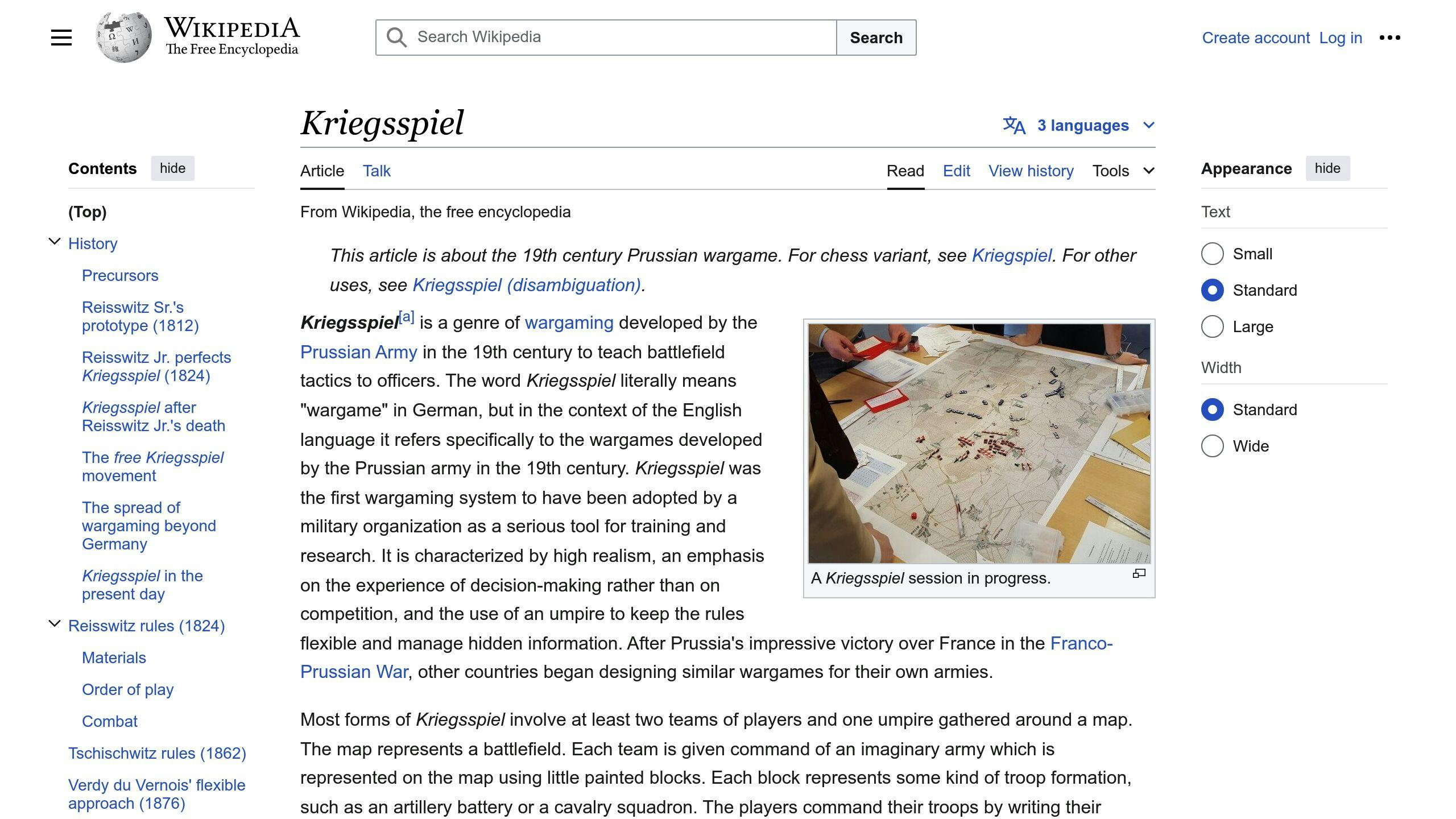
Historical Background
In the 19th century, the Prussian Army created Kriegsspiel, a military simulation game. The game aimed to train army officers in tactics and strategy. Kriegsspiel played a key role in the Prussian military's victory over France in the Franco-Prussian War of 1870.
How the Game Worked
Kriegsspiel was played on a topographic map, with tokens representing military units. The game simulated land operations from brigade level and above. Players wrote orders for imaginary subordinates and received written replies. Umpires processed the orders, wrote messages, and resolved conflicts based on the game's rules. Only the umpires' map showed the true situation, while players' maps displayed their assessments.
| Game Component | Description |
|---|---|
| Map | Topographic map used for gameplay |
| Units | Represented by tokens on the map |
| Orders | Players wrote orders for imaginary subordinates |
| Umpires | Processed orders, wrote messages, and resolved conflicts |
| Umpires' Map | Showed the true situation in the simulation |
| Players' Maps | Displayed players' assessments of the situation |
Military Impact
Kriegsspiel was a crucial tool for the Prussian military, allowing officers to practice decision-making and strategy in a simulated environment. The game's popularity contributed to Germany's swift defeat of France in 1870. Kriegsspiel had a significant impact on military strategy and tactics, making it an important part of military history.
2. Crown and Anchor: A Naval Tradition
Historical Background
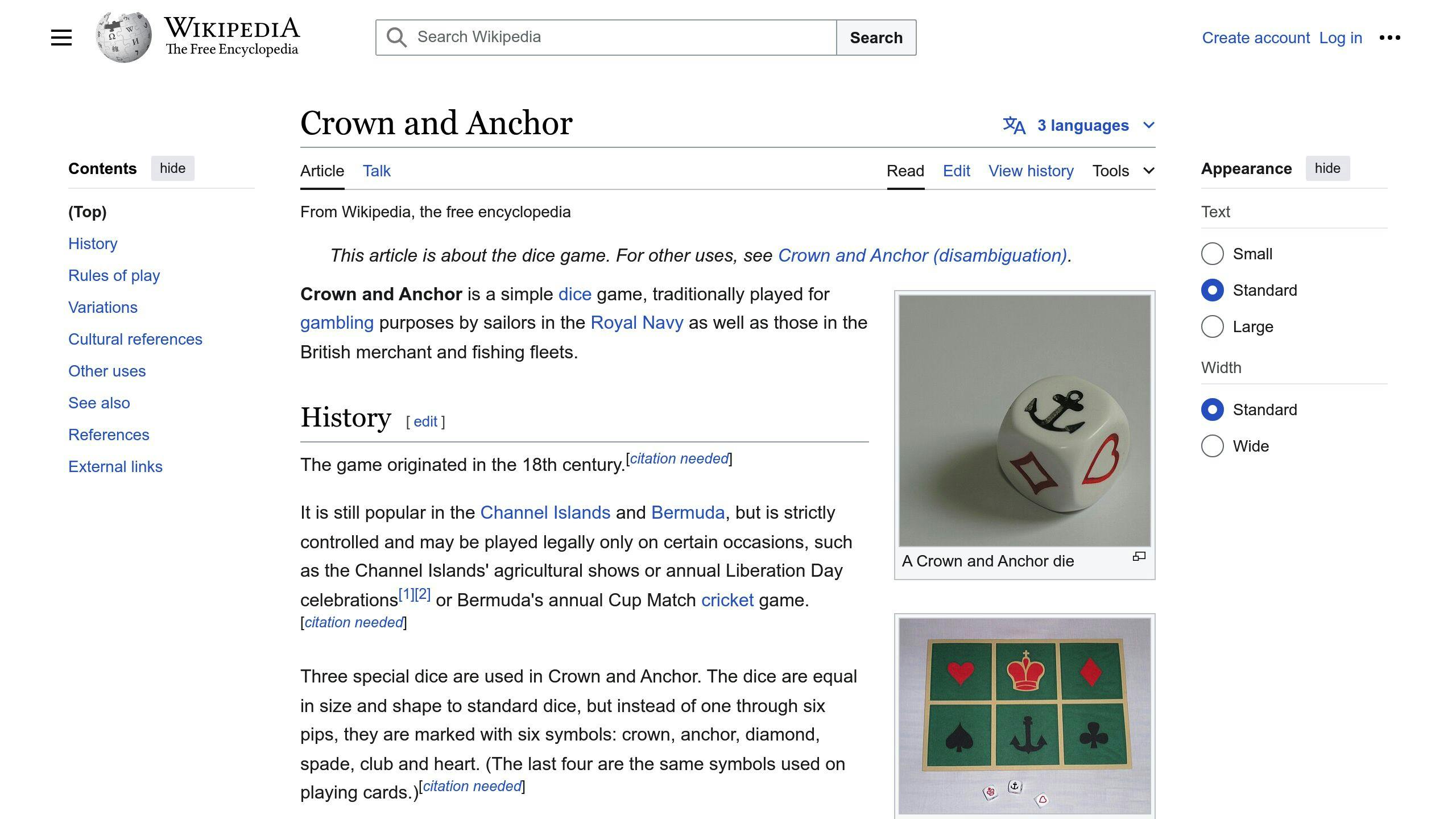
Crown and Anchor is a simple dice game with a long history in the British Royal Navy. Sailors played this game on ships starting in the 18th century. It was a favorite pastime for naval officers and crew, providing fun and relaxation during long voyages.
How to Play
The game uses three dice, each with six sides showing different symbols:
- Crown
- Anchor
- Heart
- Diamond
- Club
- Spade
Players bet on which symbols will appear after rolling the dice. The game's simplicity and fast pace made it ideal for sailors seeking a quick break from duties.
Importance for Sailors
Crown and Anchor played a key role in boosting morale among British sailors during wartime. The game offered a much-needed distraction from the dangers and hardships of naval life. It also helped foster camaraderie and teamwork among crew members, which were essential for successful naval operations.
| Game Component | Description |
|---|---|
| Dice | Three dice with six symbols each |
| Symbols | Crown, anchor, heart, diamond, club, spade |
| Gameplay | Players bet on which symbols will appear after rolling |
| Benefits | Provided entertainment, relaxation, and bonding for sailors |
3. Roman Tesserae: Ancient Military Dice Game
Historical Background
Roman soldiers played a dice game called Tesserae, which originated in Greece. The Romans adapted the game to suit their entertainment needs. Tesserae was played with three dice, and the goal was to roll three sixes or the highest combined numbers.
How to Play
Players used a special cup called a fritillium to throw the dice. The game was played on wooden, bronze, or marble boards, depending on the player's social status and wealth. Wealthy Romans had ornate boards with their names inscribed. A roll of "dogs" was a low score, while a roll of "Venus" was a high score.
Importance for Soldiers
Tesserae was a significant part of ancient Roman military culture. Soldiers played the game to:
- Pass the time
- Relieve stress
- Boost morale
The game also helped soldiers bond and socialize, which was important for successful military operations. The popularity of Tesserae among Roman soldiers shows the value of entertainment and leisure activities in military life.
| Game Component | Description |
|---|---|
| Dice | Three dice with six sides each |
| Cup | Fritillium used to throw dice |
| Board | Wooden, bronze, or marble boards based on social class and wealth |
| Scores | "Dogs" (low score), "Venus" (high score) |
| Benefits | Passed time, relieved stress, boosted morale, fostered camaraderie |
4. Craps in WWII: The Soldiers' Favorite
A Popular Pastime
During World War II, Craps was undoubtedly the most popular dice game among soldiers. Its portability and simplicity made it an ideal pastime for soldiers in the trenches.
Makeshift Setup
Soldiers played a street version of Craps on blankets, using blanket rolls to prevent the dice from rolling away. This makeshift setup allowed them to play the game anywhere, anytime.
| Game Component | Description |
|---|---|
| Surface | Blankets used as the gaming surface |
| Dice Barrier | Blanket rolls prevented dice from rolling out |
| Portability | Minimal equipment needed, allowing play anywhere |
Simple Rules
The street version of Craps played by soldiers was a simplified version of the game. The objective was to roll the dice and score points, with the highest score winning.
Boosting Morale
Craps played a crucial role in boosting morale and relieving stress among soldiers during WWII. The game provided a much-needed distraction from the harsh realities of war, allowing soldiers to bond and socialize with each other.
The popularity of Craps among soldiers highlights the importance of entertainment and leisure activities in military life.
5. War Games: Predicting Battles with Dice
Historical Background
For a long time, military leaders have used war games to predict battle outcomes and develop strategies. These games involve simulating conflicts using dice to introduce an element of chance, similar to the unpredictability of real warfare.
In ancient Rome, dice were used in simple war games to simulate battles. Later, in the 19th century, the Prussian military developed a more advanced game called Kriegsspiel, which used dice to determine the results of combat.
How War Games Work
War games combine strategy and chance. Players take turns making decisions about troop movements, resource allocation, and tactics. Then, they roll dice to determine the outcomes of these actions. The dice rolls add unpredictability, mimicking the uncertainties of actual warfare.
The specific game mechanics vary, but the goal is to simulate realistic battle scenarios while allowing for unexpected events.
Military Importance
War games with dice serve several purposes for military forces:
- Strategy Development: By simulating unpredictable situations, these games help strategists develop effective tactics and contingency plans.
- Training: War games train military personnel in decision-making and problem-solving skills.
- Testing: New military doctrines and strategies can be tested through war games before implementation, avoiding risks to lives or resources.
| Purpose | Description |
|---|---|
| Strategy Development | Develop effective tactics and contingency plans |
| Training | Train personnel in decision-making and problem-solving |
| Testing | Test new doctrines and strategies before implementation |
The use of dice in war games allows military forces to prepare for the uncertainties of real combat while minimizing risks. These games have played a crucial role in military planning and training throughout history.
sbb-itb-9dfdbdd
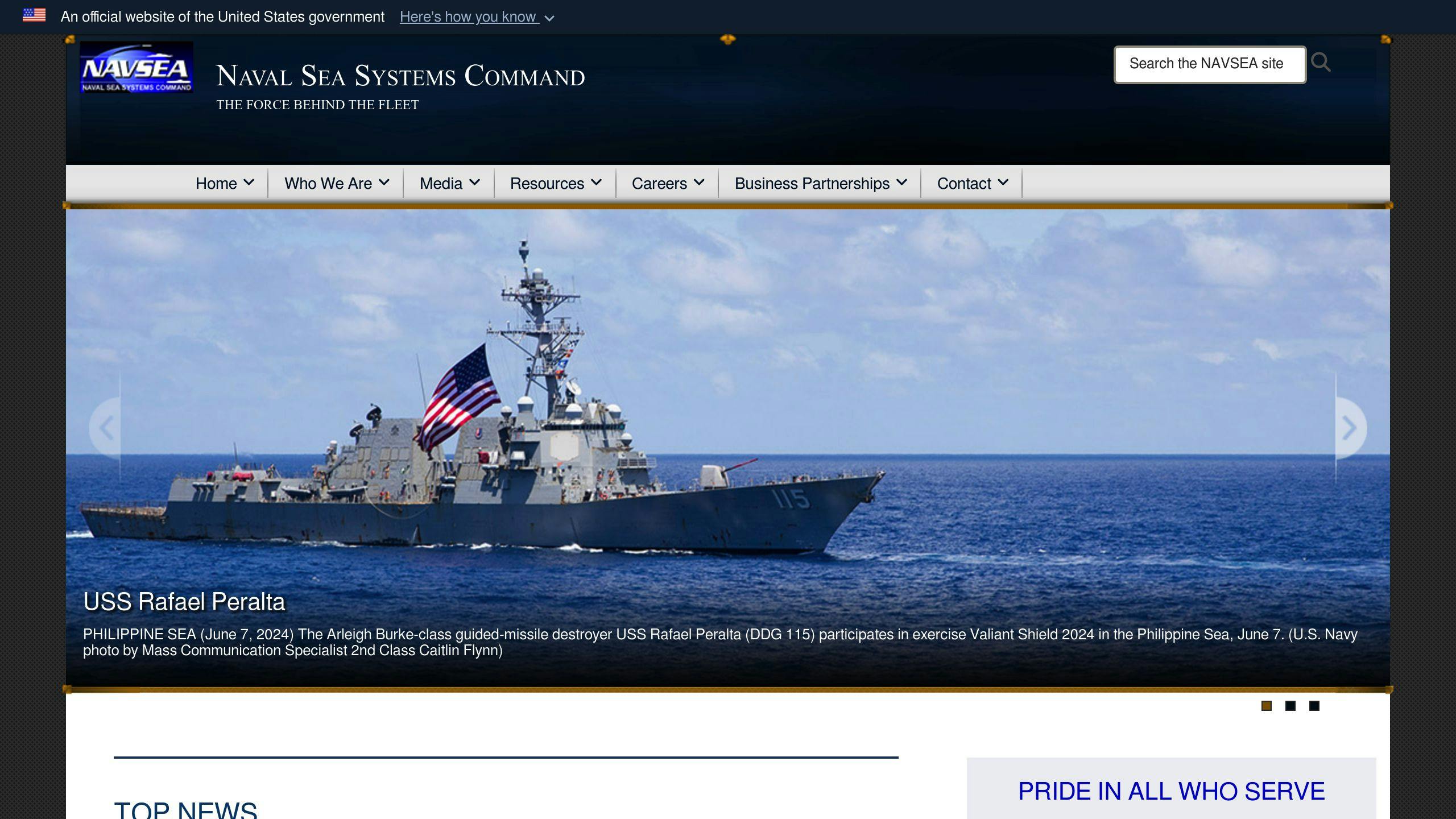
6. NAVSEA's Dice Game: Understanding the Unpredictability of Naval Warfare
Historical Context
The United States Navy's Naval Sea Systems Command (NAVSEA) created a dice game to simulate naval battles. The game aimed to help naval officers and strategists prepare for the uncertainties of combat at sea.
How the Game Works
NAVSEA's dice game uses complex rules and probability calculations to mimic the unpredictability of naval warfare. Players roll dice to determine the outcomes of various actions, such as:
- Ship movements
- Weapon engagements
- Environmental factors like weather and sea conditions
Military Importance
This dice game has played a crucial role in naval warfare strategy and training. By simulating unpredictable situations, it helps naval officers:
- Develop effective tactics and backup plans
- Test new strategies in a low-risk environment before real-world implementation
The game has been instrumental in preparing the US Navy for naval conflicts and has contributed significantly to the development of modern naval warfare tactics.
| Game Component | Purpose |
|---|---|
| Complex Rules | Simulate unpredictability of naval battles |
| Probability Calculations | Mimic uncertain outcomes |
| Dice Rolls | Determine results of actions like ship movements, weapon engagements, and environmental factors |
| Benefits | |
|---|---|
| Develop Tactics | Prepare for unpredictable situations |
| Test Strategies | Evaluate new approaches in a low-risk environment |
| Train Officers | Practice decision-making and problem-solving |
7. Board Games and Dice in Ancient Rome
Games Were Popular
The ancient Romans loved playing games, and dice games were a favorite form of entertainment. The vast Roman Empire meant people had plenty of time to pass, and games were a way to socialize and even gamble. Dice games were played by people from all walks of life, from soldiers to merchants to nobles.
How They Played
Roman dice games used three cubic dice, and the goal was to roll certain numbers or combinations. Tesserae was a popular dice game where players rolled three dice to score points. The game often involved betting, and it was a common pastime in taverns and public places.
Soldiers Played Too
Dice games weren't just for fun - soldiers played them too during long military campaigns. Roman soldiers would often play Tesserae to relax and take their minds off the stresses of war. The simple game provided a much-needed distraction from the dangers of battle.
| Game | Description |
|---|---|
| Tesserae | Roll three dice to score points |
| Micatio | Cast fingers and guess the sum or odd/even |
| Navia Aut Capita | Flip a coin to determine the winner |
Dice games were important for Roman soldiers. The games allowed them to bond, relax, and escape the pressures of war for a while. Games played a big role in the social and cultural life of the Roman Empire.
8. Michiel Sweerts' 'Soldiers Playing Dice'
Historical Background
In the mid-17th century, Dutch and Flemish artist Michiel Sweerts created the painting "Soldiers Playing Dice." This artwork was part of a series depicting daily life in Rome, where Sweerts lived for around ten years. Such paintings were meant for sale on the open market, similar to other northern artists' works in Rome.
The Painting
The painting shows two figures illuminated by a focused light source against a dark night background. The scene is painted in greyish-brown tones, with a yellow riding coat and red cape standing out as the main subjects. Although the specific game is not stated, the title and context suggest the soldiers are playing a dice game during their downtime.
| Painting Details |
9. Battle Dice: WWII-Themed Dice Sets
Historical Context
During World War II, soldiers often found relief in playing games of chance, like dice games. These simple games provided entertainment and helped build bonds between soldiers coping with the stresses of war. Today, WWII-themed dice sets have become popular among war game enthusiasts and collectors interested in military history.
Game Mechanics
WWII-themed dice sets, such as those made by Chessex, feature custom designs and insignia engraved on the "1" side of each die. A typical set includes 12 six-sided dice, with each die representing a different nation involved in the war:
| Nation | Dice Design |
|---|---|
| Germany | Dark Grey/Black Opaque |
| Japan | Red/White Opaque |
| Soviet Union | Scarlet/Gold Scarab |
| United Kingdom | (Design details not provided) |
| United States | (Design details not provided) |
The unique designs and colors of these dice sets add to their appeal for collectors and gamers.
Military Significance
The use of custom dice sets in WWII-themed games pays tribute to the historical role of dice games in military culture. These simple games provided entertainment and helped build camaraderie and morale among soldiers during wartime. Today, these dice sets allow enthusiasts to connect with military history and honor the soldiers who fought in WWII.
| Dice Set | Release Date |
|---|---|
| 16mm 12d6 Opaque (Germany) | May 2024 |
| 16mm 12d6 Opaque (Japan) | May 2024 |
| 16mm 12d6 Scarab (Soviet Union) | May 2024 |
10. Getty Images: Soldiers Playing Dice
Historical Context
Dice games have been a part of military life for a long time. One famous example is the painting "Soldiers Playing Dice" by Michiel Sweerts, a Dutch artist from the 1600s. The painting shows two soldiers playing dice in a dimly lit setting, showing how important games were for soldiers.
Game Mechanics
The painting "Soldiers Playing Dice" shows the game mechanics of dice games in military history. The game is played with two dice, and the soldiers are focused on the outcome. This shows how chance and probability were important in military decision-making. The painting also shows the social side of dice games, as the soldiers are talking, highlighting the bond between them.
Military Importance
The painting "Soldiers Playing Dice" shows how important dice games were in military culture. It shows how games could give soldiers a break from the stress of war and help build morale. The painting is also a reminder of how chance and probability were important in military decision-making, as dice games often involved strategic thinking and risk assessment. Today, the painting is a historical artifact, giving insight into the daily lives of soldiers during war.
| Painting Details |
|---|
| Title: "Soldiers Playing Dice" |
| Artist: Michiel Sweerts |
| Date: 1656-1658 |
| Subject: Two soldiers playing dice in a dimly lit setting |
| Significance: Shows the importance of dice games in military culture, providing entertainment, camaraderie, and strategic thinking |
Comparing Dice Games in Military History
Dice games have been a popular pastime for soldiers throughout history. From ancient times to modern warfare, these simple games provided entertainment and a break from the stresses of military life. Here's a comparison of the key features of various dice games discussed in this article:
| Game | Origin | Dice Used | Key Features |
|---|---|---|---|
| Kriegsspiel | Prussia | 2 | Simulated battles and strategies |
| Crown and Anchor | British Navy | 3 | Symbols like crowns and anchors |
| Roman Tesserae | Ancient Rome | 2-5 | Used for gaming and fortune-telling |
| Craps | WWII | 2 | Fast-paced, high-stakes gameplay |
| War Games | Military Tactics | 2-5 | Simulated unpredictable battle scenarios |
| NAVSEA's Dice Game | US Navy | 2 | Focused on naval warfare uncertainties |
| Michiel Sweerts' Painting | 17th Century Art | 2 | Depicted soldiers playing dice in dim light |
This table highlights the diverse origins, gameplay mechanics, and unique aspects of each dice game. From the strategic Kriegsspiel to the fast-paced Craps, each game offered a distinct experience for soldiers. By comparing these games, we gain insight into the role dice games played in military culture throughout history.
Conclusion
Dice games have played a big part in military history. They gave soldiers fun and a break from the stress of war. From ancient Rome to modern times, these games changed to fit the times. Our look at 10 facts about dice games in military history shows how they impacted military culture. They could simulate battles, predict outcomes, and bring soldiers together.
Dice games were common in military life because they were easy to play. Whether for money or just for fun, these games were a key part of a soldier's life. By looking at the different origins, rules, and special parts of each game, we see how dice games shaped military culture. They gave comfort in uncertain times.
| Game | Origin | Dice | Key Features |
|---|---|---|---|
| Kriegsspiel | Prussia | 2 | Simulated battles and strategies |
| Crown and Anchor | British Navy | 3 | Symbols like crowns and anchors |
| Roman Tesserae | Ancient Rome | 2-5 | Used for gaming and fortune-telling |
| Craps | WWII | 2 | Fast-paced, high-stakes |
| War Games | Military Tactics | 2-5 | Simulated unpredictable battles |
| NAVSEA's Game | US Navy | 2 | Focused on naval warfare |
| Michiel Sweerts' Painting | 17th Century Art | 2 | Showed soldiers playing dice |
This table shows the different dice games. From the strategic Kriegsspiel to the fast Craps, each game gave soldiers a unique experience. Comparing these games helps us understand how dice games were part of military culture throughout history.